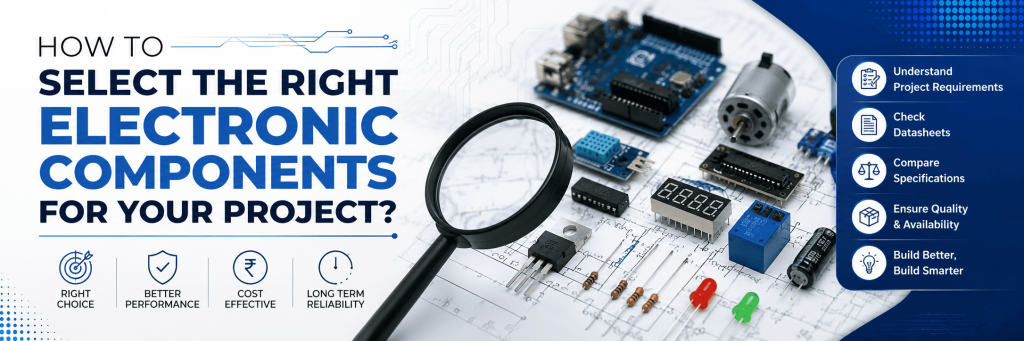
Building a successful electronics project is not only about writing code or connecting circuits. The most important step is selecting the right electronic components that match your project requirements. Whether you are designing an IoT device, robotics system, embedded product, or PCB-based hardware, choosing the correct components directly affects performance, reliability, cost, and product life.
A wrong component selection can lead to circuit failure, overheating, unstable operation, or unnecessary cost.
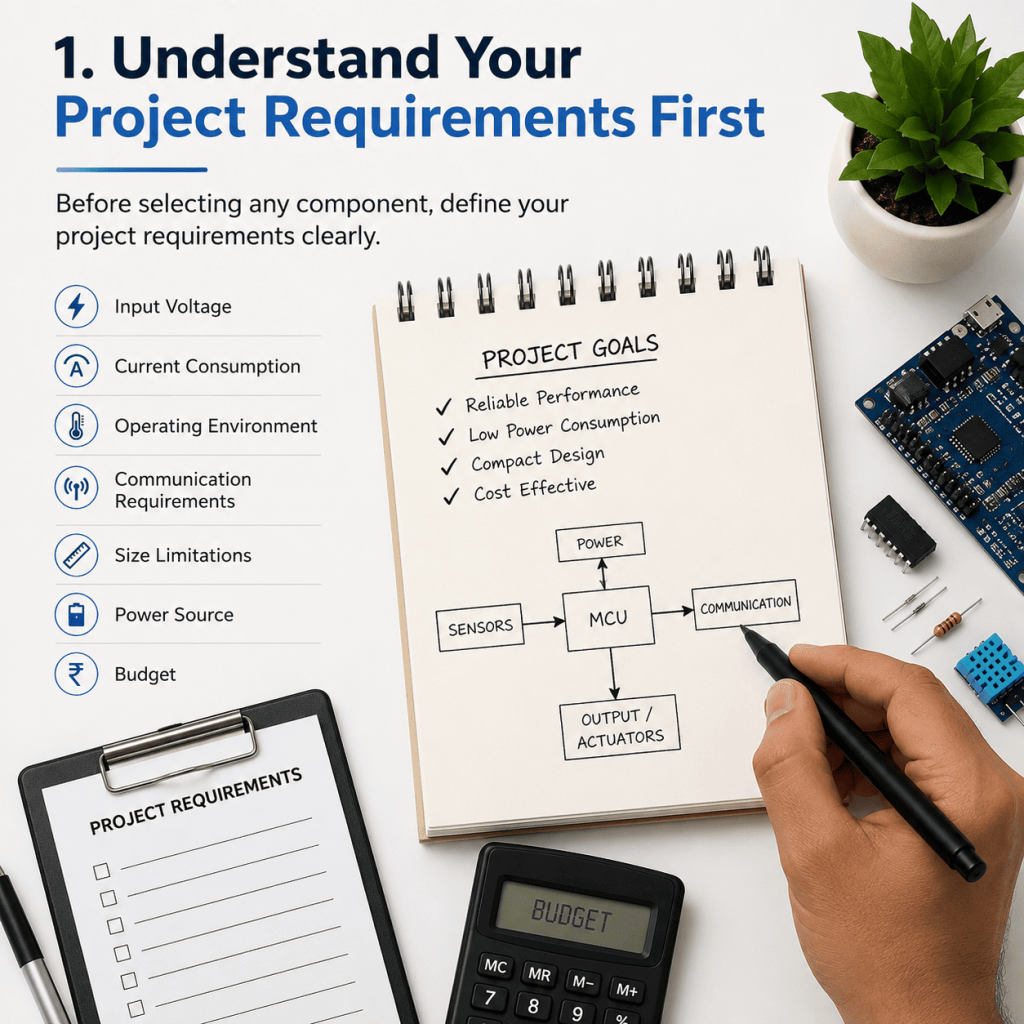
1. Understand Your Project Requirements First
Before selecting any component, define your project requirements:
- Input voltage
- Current consumption
- Operating environment
- Communication requirements
- Size limitations
- Power source
- Budget
For example, a battery-powered IoT sensor requires low-power components, while a motor control system requires high-current components.
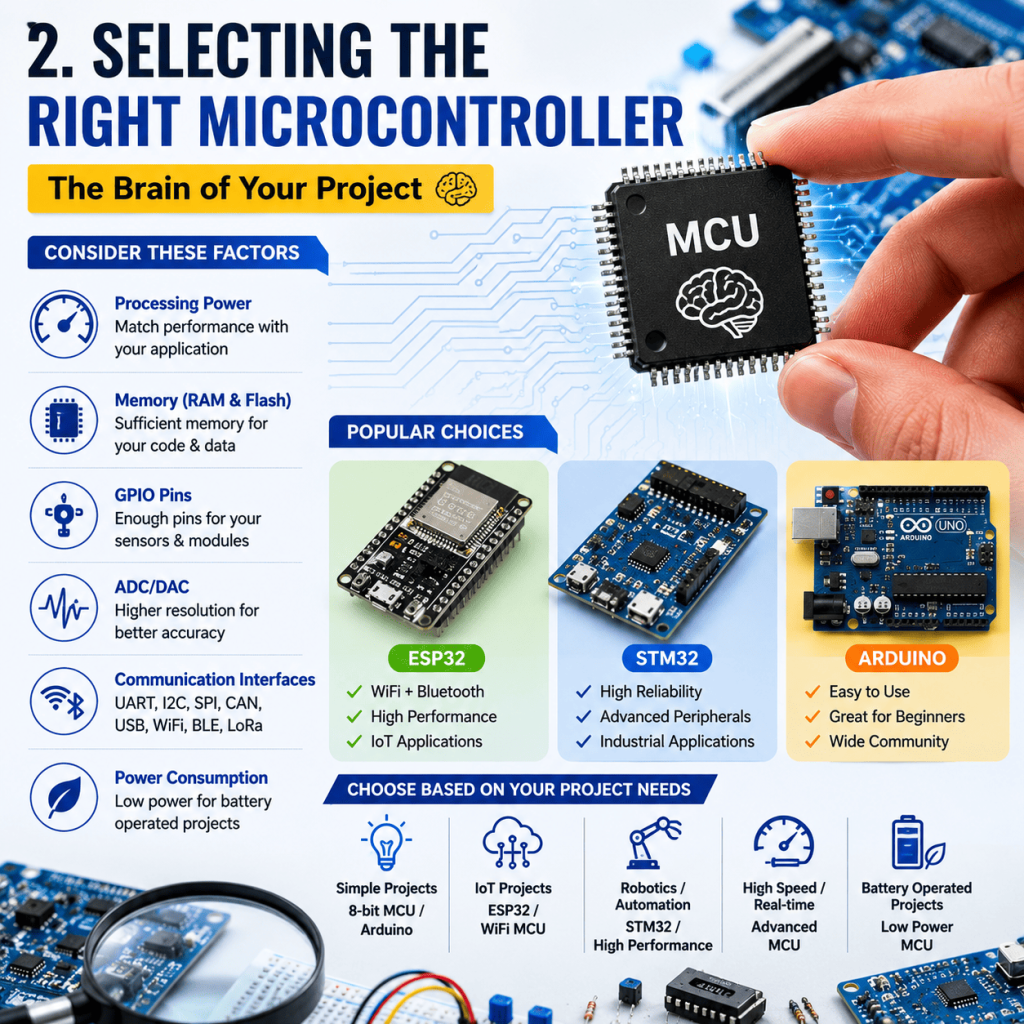
2. Selecting the Right Microcontroller
The microcontroller is the brain of an electronic system.
Consider:
Processing Power
Choose according to application needs:
- Simple automation → 8-bit MCU
- IoT projects → ESP32 / STM32
- Advanced robotics → Higher-performance controllers
Important Parameters:
- CPU speed
- RAM and Flash memory
- Number of GPIO pins
- ADC resolution
- Communication interfaces
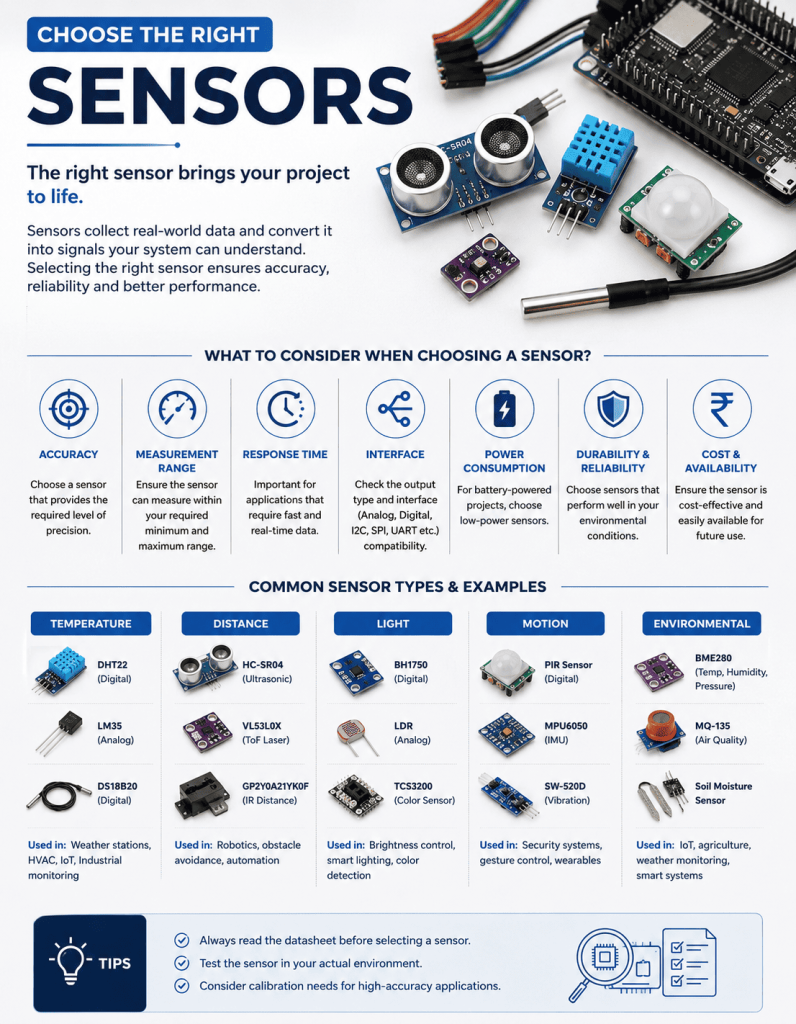
3. Choosing Sensors
Sensors collect real-world data.
Selection depends on:
- Accuracy
- Measurement range
- Response time
- Interface type
Examples:
Temperature:
- Digital sensors
- Analog sensors
Distance:
- Ultrasonic
- Infrared
- LiDAR
For industrial projects, always consider sensor durability and calibration requirements.
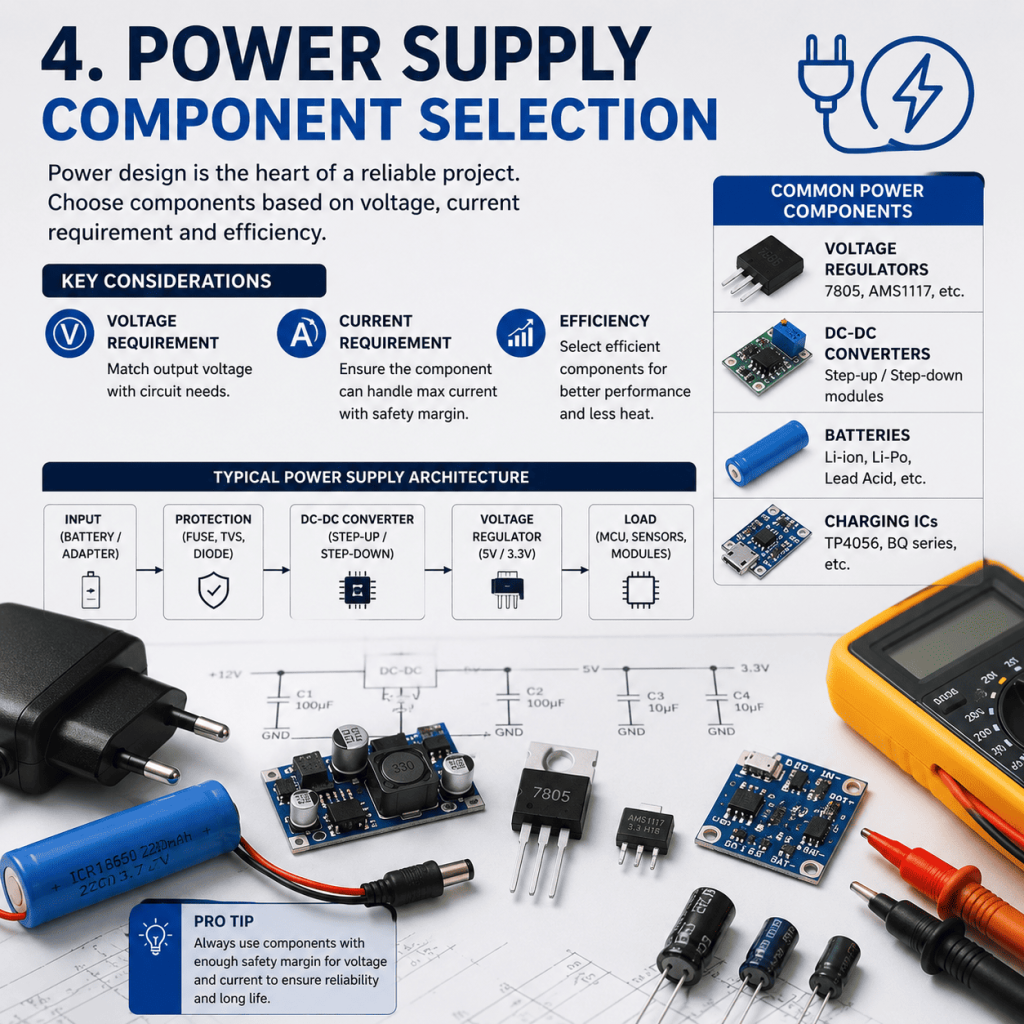
4. Power Supply Component Selection
Power design is one of the most important parts of any project.
Choose components based on:
- Voltage requirement
- Current requirement
- Efficiency
Common components:
- Voltage regulators
- DC-DC converters
- Batteries
- Charging ICs
Always keep safety margin while selecting power components.
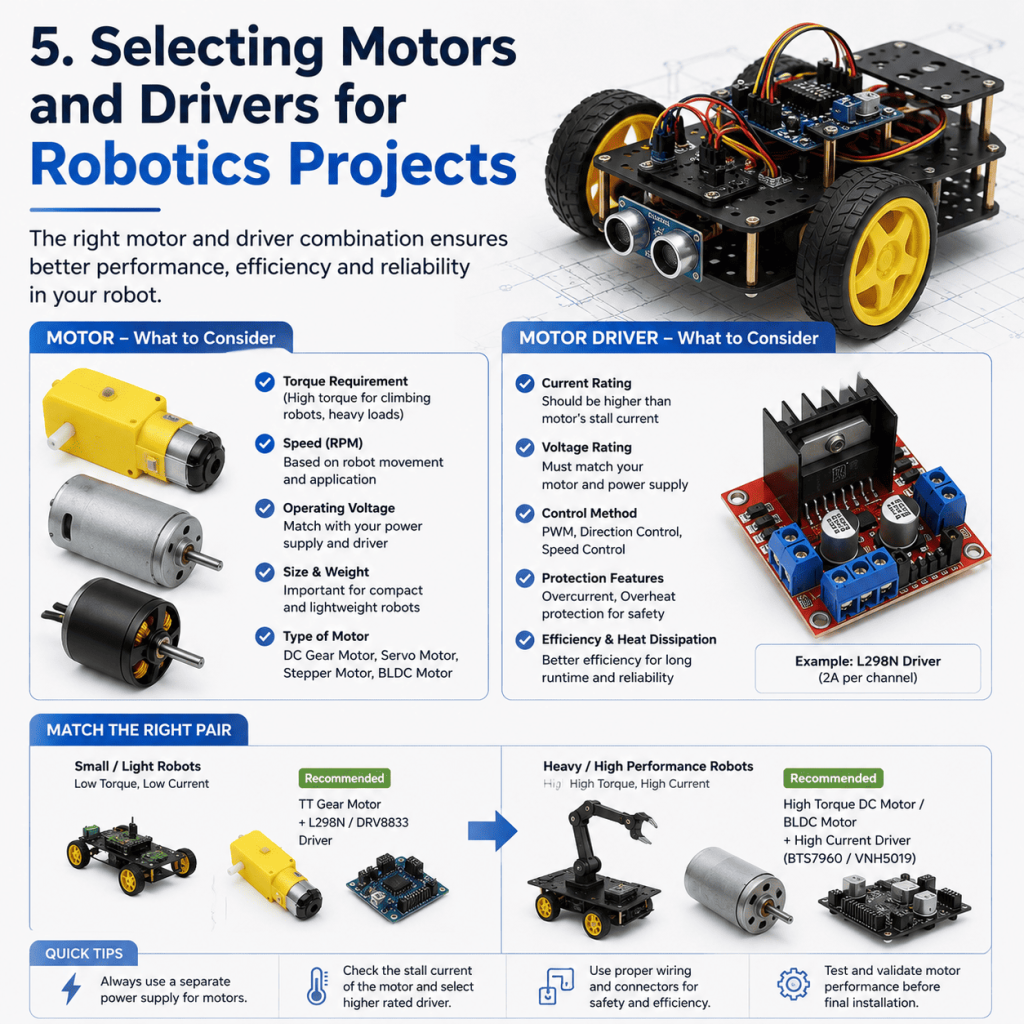
5. Selecting Motors and Drivers for Robotics Projects
For robotics applications, component selection depends on:
Motor:
- Torque requirement
- Speed
- Operating voltage
Motor Driver:
- Current capacity
- Protection features
- Control method
Example:
A small robot may use an L298N driver, while industrial automation may require advanced MOSFET-based drivers.
Conclusion
Selecting the right electronic components is the foundation of a reliable project. A proper component selection process helps create efficient, cost-effective, and long-lasting electronic products.
Whether you are developing an engineering project, robotics prototype, IoT device, or custom PCB, choosing components carefully can make the difference between a working prototype and a successful product.
Contact: 7905549288
Website: www.robocircuithub.in
Instagram: @robocircuithub
Avnish BAJPAI (Founder)
Avnish Bajpai is an entrepreneur, embedded systems engineer, and technology innovator with 8+ years of experience in Smart Water Management, IoT, and robotics. As Director of Zbee Technologies and founder of RoboCircuitHub, he is passionate about developing intelligent solutions, empowering learners, and building innovative products that create real-world impact.